Parthenon Παρθενών
Athens, Greece UNESCO World Heritage Site
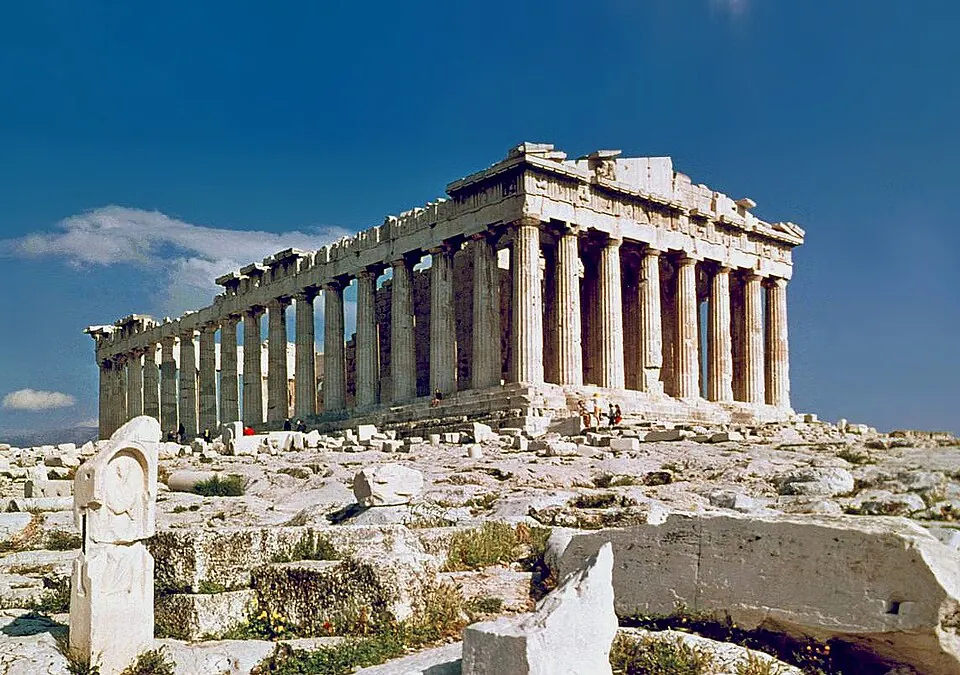
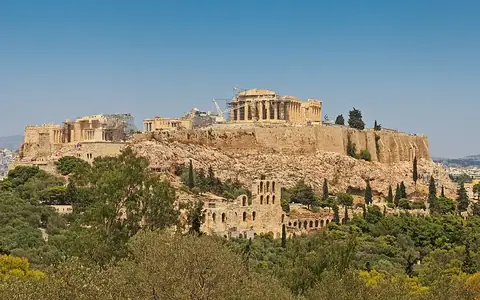
The Parthenon is an ancient Greek temple and religious building ruin situated on the Acropolis of Athens. Designed by architects Ictinus, Callicrates, and Phidias, this peripteral structure was built from Pentelic marble. It stands as a UNESCO World Heritage Site and is the most-looked-up sight in Greece.
Planning a visit
The climate in Athens is mildest during the spring and autumn months. April sees highs of 20 °C and limited rain, while May offers warmer temperatures averaging 26 °C. September is also comfortable, with highs of 29 °C. Summer months like July and August are hot, with daily highs of 33 °C and very little rainfall. Winter months, particularly December and January, are cooler with highs of 12 °C to 13 °C and the highest frequency of rainy days. Wheelchair access to the site is limited.
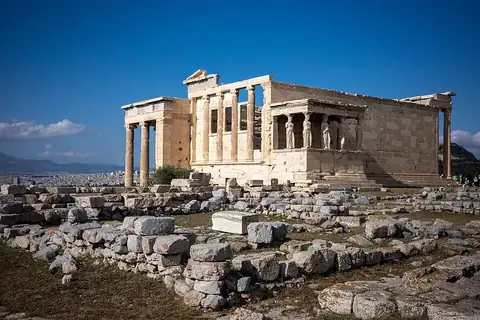
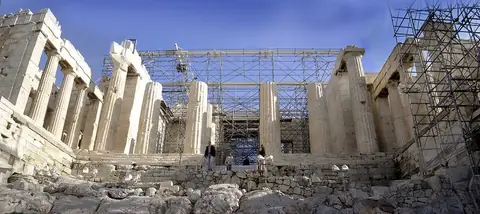
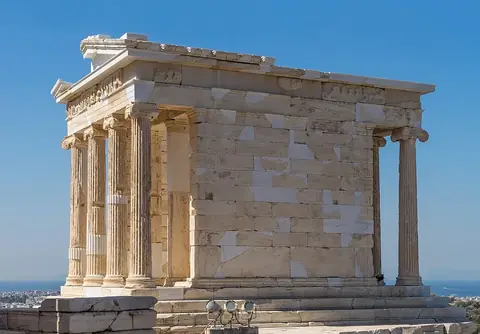
The Parthenon is located within the Athens Municipality, just 1 kilometer from the center of Athens. Travelers arriving by air can use the Athens Eleftherios Venizelos International Airport, which is 20 kilometers away. Because the Parthenon is part of the Acropolis of Athens, visitors can easily combine their trip with visits to nearby structures on the same site, including the Erechtheion, the Propylaea, the Temple of Athena Nike, and the Theatre of Dionysus, all of which are situated within 0.2 kilometers.
Weather by month
The warmest month is July, with an average high of 33 °C. The wettest is December, with about 69 mm of rain.
| Jan | Feb | Mar | Apr | May | Jun | Jul | Aug | Sep | Oct | Nov | Dec | |
|---|---|---|---|---|---|---|---|---|---|---|---|---|
| Average high, °C | 12 | 13 | 16 | 20 | 26 | 31 | 33 | 33 | 29 | 23 | 17 | 13 |
| Average low, °C | 6 | 5 | 7 | 11 | 15 | 20 | 22 | 22 | 19 | 15 | 11 | 7 |
| Rainfall, mm | 53 | 41 | 47 | 32 | 18 | 8 | 9 | 6 | 16 | 36 | 63 | 69 |
| Rainy days | 11 | 8 | 8 | 5 | 5 | 5 | 3 | 2 | 5 | 5 | 9 | 9 |
Temperatures and rainfall: 1981–2010 averages for this spot (4 km grid), from CHELSA. Rainy days: 2015–2024, NASA POWER.