Amman
Capital of Jordan
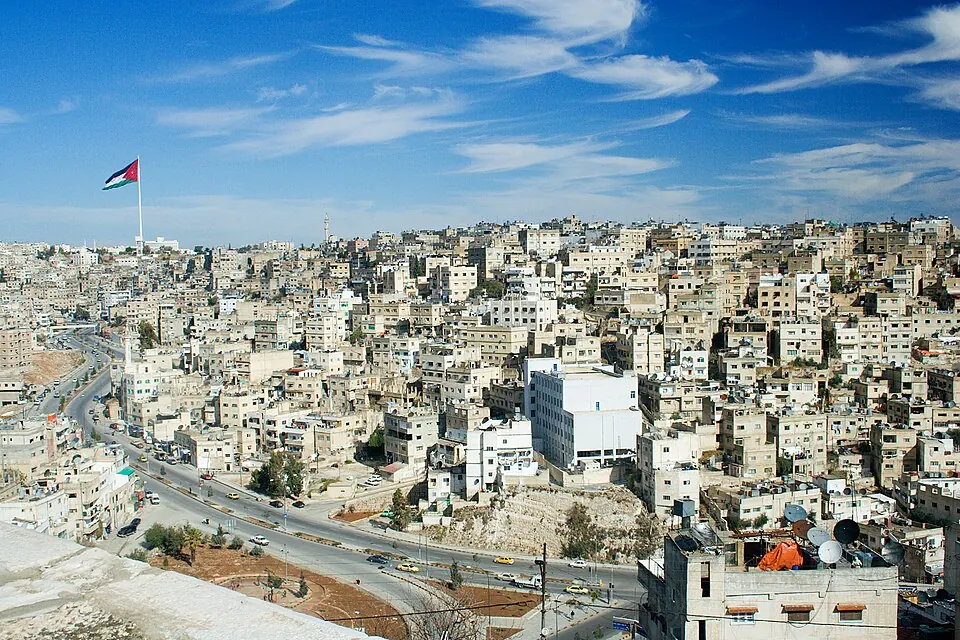
Amman is the capital of Jordan and has a population of 4007526 as of 2015. Visitors come to explore its notable locations, including the Amman Citadel, Roman Theatre, and King Abdullah I Mosque.
What to see
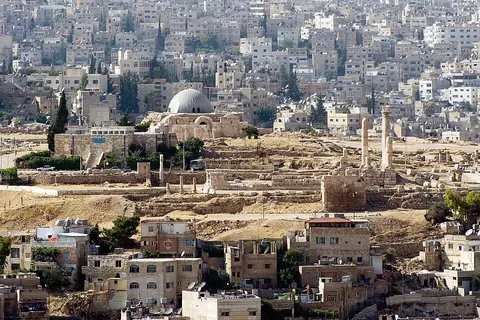
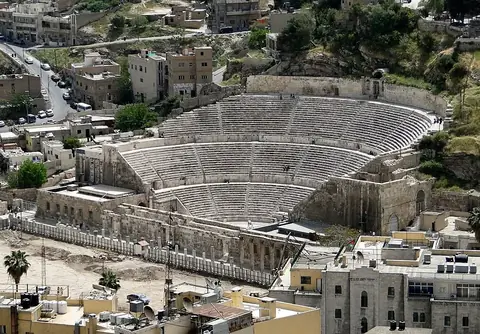
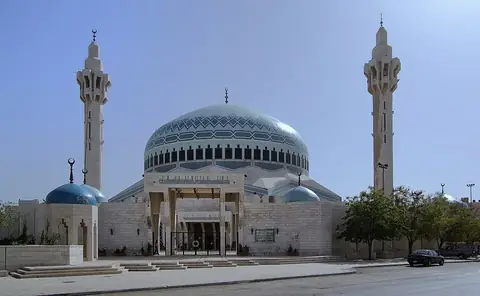
The city features historical and cultural landmarks such as the Amman Citadel, the Roman Theatre, and the King Abdullah I Mosque. Additional points of interest include the Nymphaeum, Rainbow Street, the Royal Automobile Museum, and the Umayyad Palace.
When to go
January sees highs of 11 °C and lows of 3 °C with 79 mm of rain over about 10 days. February has highs of 12 °C and lows of 3 °C with 80 mm of rain on about 7 days. March brings highs of 16 °C and lows of 6 °C with 48 mm of rain. April records highs of 22 °C and lows of 9 °C. May features highs of 27 °C and lows of 13 °C. June reaches highs of 30 °C and lows of 16 °C with no rain. July has highs of 31 °C and lows of 18 °C. August records highs of 32 °C and lows of 18 °C. September sees highs of 30 °C and lows of 17 °C. October brings highs of 25 °C and lows of 14 °C. November has highs of 18 °C and lows of 8 °C with 33 mm of rain. December records highs of 14 °C and lows of 5 °C with 57 mm of rain.
Getting there
The nearest airport is Marka International Amman Civil Airport, located 6 km from Amman.
Top sights in Amman
Weather by month
The warmest month is August, with an average high of 32 °C. The wettest is February, with about 80 mm of rain.
| Jan | Feb | Mar | Apr | May | Jun | Jul | Aug | Sep | Oct | Nov | Dec | |
|---|---|---|---|---|---|---|---|---|---|---|---|---|
| Average high, °C | 11 | 13 | 16 | 22 | 27 | 30 | 31 | 32 | 30 | 25 | 19 | 14 |
| Average low, °C | 3 | 3 | 6 | 9 | 13 | 16 | 18 | 19 | 17 | 14 | 8 | 5 |
| Rainfall, mm | 79 | 80 | 48 | 11 | 4 | 0 | 0 | 0 | 0 | 9 | 33 | 57 |
| Rainy days | 10 | 7 | 5 | 3 | 1 | 0 | 0 | 0 | 0 | 1 | 4 | 7 |
Temperatures and rainfall: 1981–2010 averages for Amman (4 km grid), from CHELSA. Rainy days: 2015–2024, NASA POWER.
Also worth a look
- Nymphaeum
- Rainbow Street
- Royal Automobile Museum
- Umayyad Palace