Cradle of Humankind
South Africa UNESCO World Heritage Site
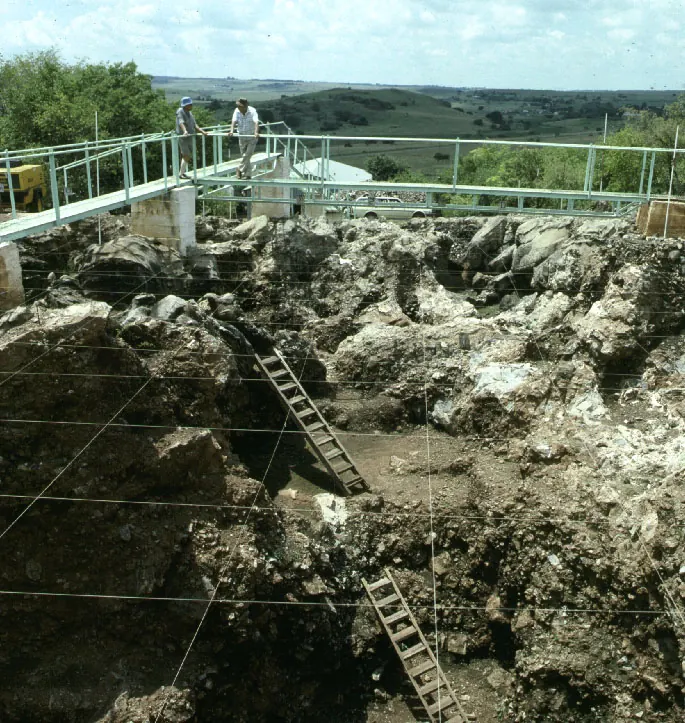
The Cradle of Humankind is a cultural heritage group and a UNESCO World Heritage Site located in South Africa. Covering an area of 274 square kilometers, it is one of the 5 most looked-up sights in the country on English Wikipedia among the country's 23 sights on this site.
Planning a visit
The site experiences daily highs and lows in temperature throughout the year. The warmest months are January, February, and December with daily highs of 25 °C and lows of 14 °C to 15 °C, though these months also see the highest rainfall, reaching up to 134 mm in January across about 17 days. The coolest months are June and July, with daily highs of 16 °C to 17 °C and lows of 3 °C, alongside very low rainfall of 3 mm to 8 mm. Admission fees apply for visiting the site.
The nearest airport is Lanseria International Airport in Johannesburg, located 27 km away. The site is 58 km from the capital, Pretoria. A nearby sight to combine with a visit is Ponte City, situated 46.6 km away.
Weather by month
The warmest month is January, with an average high of 25 °C. The wettest is January, with about 134 mm of rain.
| Jan | Feb | Mar | Apr | May | Jun | Jul | Aug | Sep | Oct | Nov | Dec | |
|---|---|---|---|---|---|---|---|---|---|---|---|---|
| Average high, °C | 25 | 25 | 23 | 21 | 19 | 16 | 17 | 19 | 23 | 24 | 24 | 25 |
| Average low, °C | 15 | 15 | 13 | 10 | 6 | 3 | 3 | 5 | 9 | 11 | 13 | 14 |
| Rainfall, mm | 134 | 106 | 93 | 39 | 13 | 8 | 3 | 7 | 20 | 72 | 96 | 122 |
| Rainy days | 17 | 14 | 10 | 9 | 3 | 2 | 1 | 1 | 3 | 6 | 11 | 16 |
Temperatures and rainfall: 1981–2010 averages for this spot (4 km grid), from CHELSA. Rainy days: 2015–2024, NASA POWER.