Reykjavík
Capital of Iceland
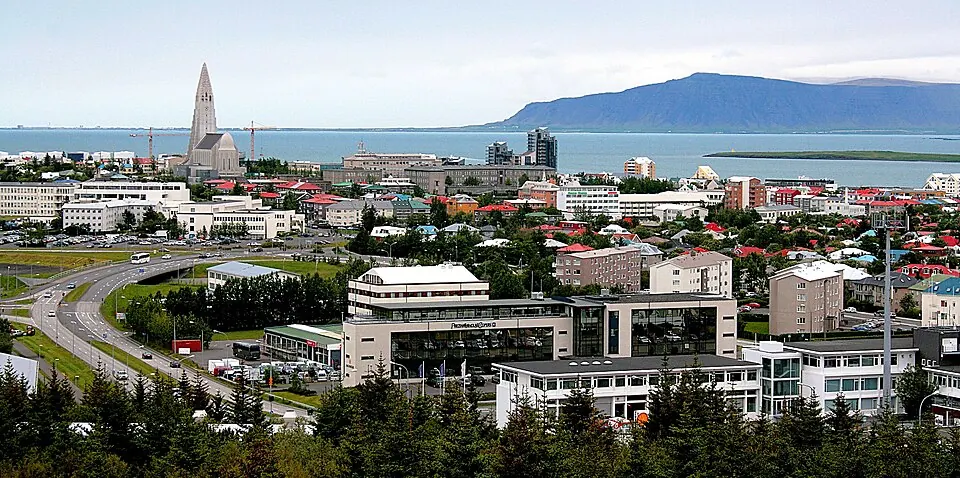
Reykjavík is the capital of Iceland and had a population of 138,772 in 2025. Visitors come to explore local sights such as Hallgrímskirkja, Harpa, and the Icelandic Phallological Museum.
What to see
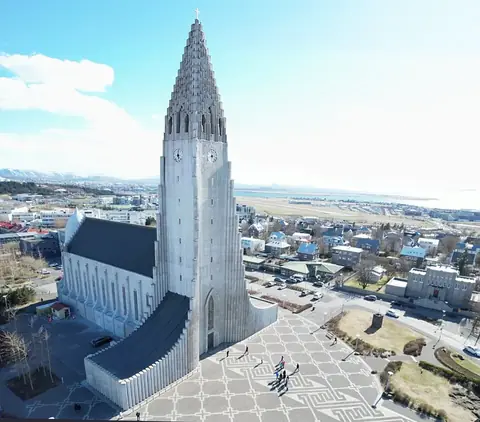
The city features several notable cultural and architectural points of interest. Visitors can view the striking architecture of the Hallgrímskirkja church and the Harpa concert hall. Other locations include the Icelandic Phallological Museum and the Imagine Peace Tower.
When to go
The warmest months are June, July, and August, with daily high temperatures reaching between 12 °C and 14 °C and lows of 7 °C to 8 °C. January, February, March, and December see daily highs between 0 °C and 2 °C with lows dropping to -4 °C or -5 °C. Monthly precipitation ranges from 62 mm in June to 145 mm in December.
Getting there
The nearest airport is Reykjavík Domestic Airport, located 2 km away. Keflavik International Airport serves as a hub and is situated 37 km from the city.
Top sights in Reykjavík


Weather by month
The warmest month is July, with an average high of 14 °C. Rain is spread fairly evenly through the year.
| Jan | Feb | Mar | Apr | May | Jun | Jul | Aug | Sep | Oct | Nov | Dec | |
|---|---|---|---|---|---|---|---|---|---|---|---|---|
| Average high, °C | 1 | 1 | 2 | 5 | 9 | 13 | 14 | 13 | 10 | 6 | 2 | 1 |
| Average low, °C | -5 | -4 | -4 | -1 | 3 | 7 | 9 | 8 | 5 | 1 | -2 | -4 |
| Rainfall, mm | 128 | 130 | 123 | 92 | 76 | 62 | 73 | 101 | 116 | 115 | 124 | 145 |
| Rainy days | 21 | 19 | 20 | 17 | 18 | 17 | 15 | 16 | 20 | 20 | 18 | 19 |
Temperatures and rainfall: 1981–2010 averages for Reykjavík (4 km grid), from CHELSA. Rainy days: 2015–2024, NASA POWER.
Also worth a look
- Alþingishúsið
- Austurvöllur
- Christ the King Cathedral
- Hellisheiði Power Station
- National Gallery of Iceland
- National Museum of Iceland
- Perlan
- Reykjavik Art Museum
- Reykjavík Cathedral
- The Settlement Exhibition
- Tjörnin
- Árbæjarsafn