Abuja
Capital of Nigeria

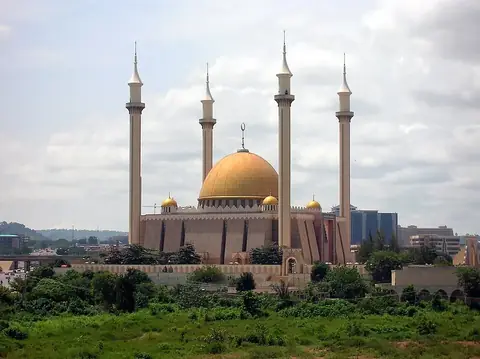
Abuja is the capital of Nigeria and had a population of about 1.7 million in 2022. Visitors come to the city to see landmarks such as Zuma Rock, Aso Rock, and the Abuja National Mosque.
What to see
The city features prominent natural and architectural landmarks. Aso Rock and the nearby Zuma Rock are key natural sites. The Abuja National Mosque is a significant structure. Other areas and sites in the city include the National Assembly Complex, the National Christian Centre, Millennium Park, Millennium Tower, Jabi Lake, and the districts of Asokoro and Wuse.
When to go
The dry season, lasting from November to March, offers the most pleasant weather for travel. During these months, daily highs range from 32 °C to 35 °C, and rainfall is minimal, often zero or near zero days. The wet season, from May to October, brings significantly more rain, with August seeing the highest precipitation at 333 mm over 27 days and daily highs of 27 °C.
Getting there
The city is served by Nnamdi Azikiwe International Airport, which is located 26 km away.
Top sights in Abuja


Weather by month
The warmest month is March, with an average high of 35 °C. The wettest is August, with about 333 mm of rain.
| Jan | Feb | Mar | Apr | May | Jun | Jul | Aug | Sep | Oct | Nov | Dec | |
|---|---|---|---|---|---|---|---|---|---|---|---|---|
| Average high, °C | 34 | 35 | 35 | 34 | 31 | 28 | 27 | 27 | 28 | 29 | 32 | 33 |
| Average low, °C | 21 | 22 | 24 | 24 | 23 | 22 | 21 | 21 | 21 | 21 | 21 | 21 |
| Rainfall, mm | 2 | 3 | 22 | 75 | 150 | 203 | 270 | 333 | 249 | 145 | 9 | 2 |
| Rainy days | 0 | 1 | 5 | 10 | 21 | 26 | 27 | 27 | 27 | 21 | 3 | 0 |
Temperatures and rainfall: 1981–2010 averages for Abuja (4 km grid), from CHELSA. Rainy days: 2015–2024, NASA POWER.
Also worth a look
- Asokoro
- Jabi Lake
- Millennium Park
- Millennium Tower
- National Assembly Complex
- National Christian Centre
- Wuse