Nigeria
Country · Africa, Western Africa
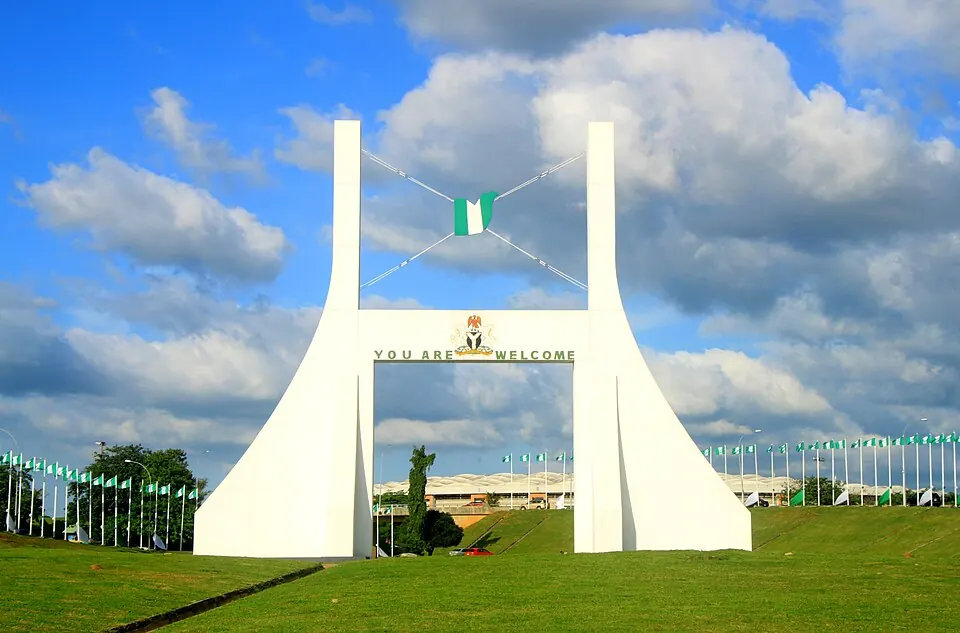
Nigeria is a country in Western Africa with an area of about 924,000 square kilometers and a population of approximately 238 million people. Its capital is Abuja, and the country shares land or sea borders with Benin, Cameroon, Chad, Niger, and São Tomé and Príncipe.
Highlights
This reference covers 5 top sights across the country. In the capital, Abuja, visitors can see the Abuja National Mosque and the prominent Aso Rock. Nearby, Zuma Rock serves as a notable landmark. Further afield, the list includes Victoria Island in Lagos and the UNESCO-listed Osun-Osogbo site.
Food and drink
Local cuisine features a variety of dishes including Jollof rice, Akara, Eba, Suya, Palm nut soup, Afang soup, Kuli-kuli, Kilishi, Chin chin, Ogbono soup, Amala, and Ekuru.
When to go
The weather in Abuja is generally hot throughout the year. The dry season, from November to March, offers limited rainfall and high temperatures ranging between 32 °C and 35 °C, making it a suitable time for travel. The rainy season begins in April and peaks between July and September, when daily highs drop to around 27 °C to 28 °C and rainfall is frequent, often occurring on more than 25 days per month.
Practical notes
The currency is the naira. English is the official language. The country uses 230 V electricity with plug types D and G. Traffic drives on the right side of the road. The time zone is UTC+01:00.
Cities
Food and drink to try in Nigeria
- Jollof rice
- Akara
- Eba
- Suya
- Palm nut soup
- Afang soup
- Kuli-kuli
- Kilishi
- Chin chin
- Ogbono soup
- Amala
- Ekuru
Top sights in Nigeria
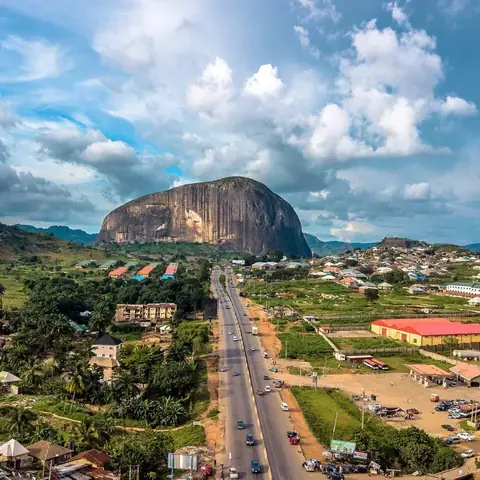 Zuma RockAbuja
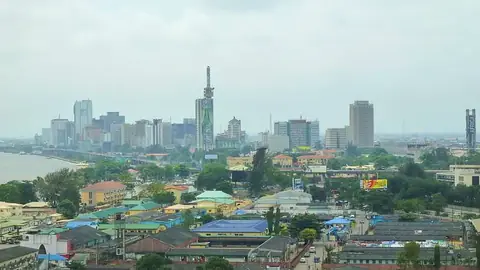 Victoria Island, LagosLagos
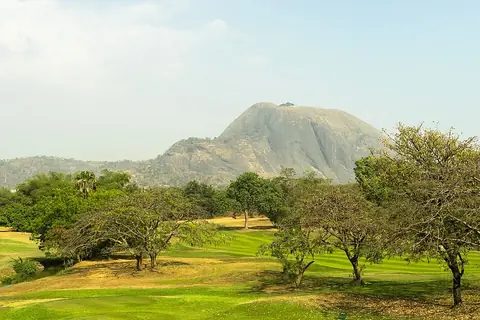 Aso RockAbuja
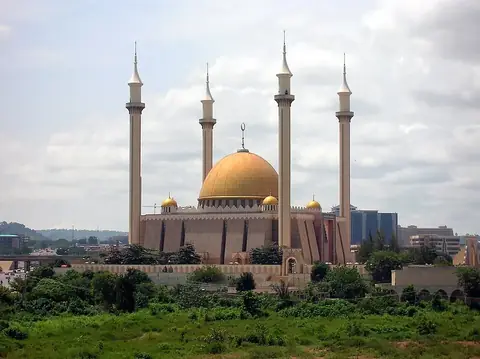 Abuja National MosqueAbuja
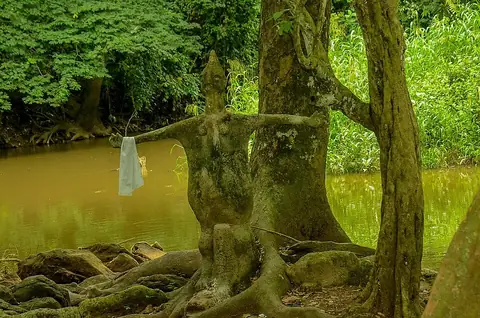 UNESCOOsun-OsogboOsogbo
 IkoyiLagos
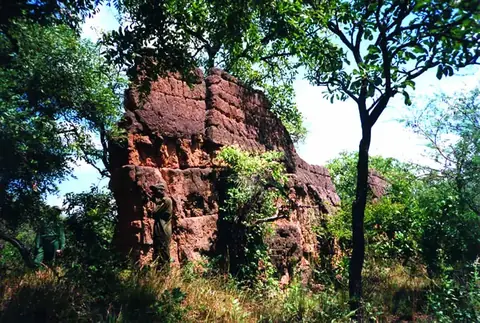 Sungbo's EredoIjebu Ode
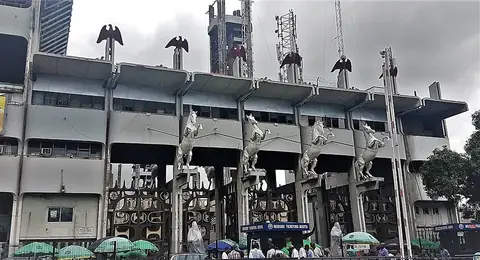 Tafawa Balewa SquareLagos
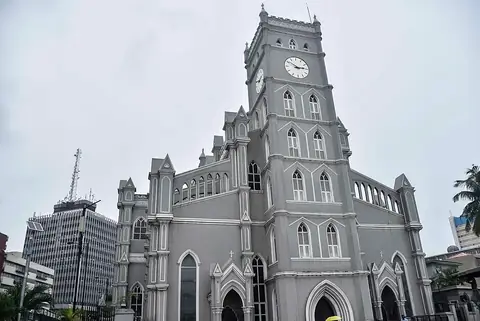 Cathedral Church of Christ, LagosLagos
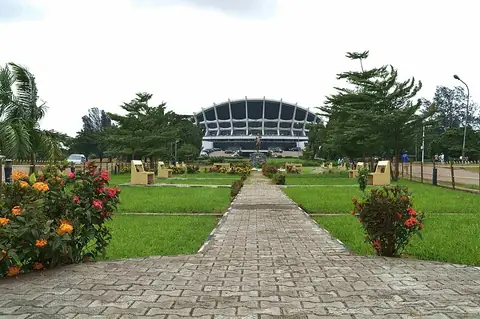 National TheatreLagos
 Ancient Kano City WallsKano
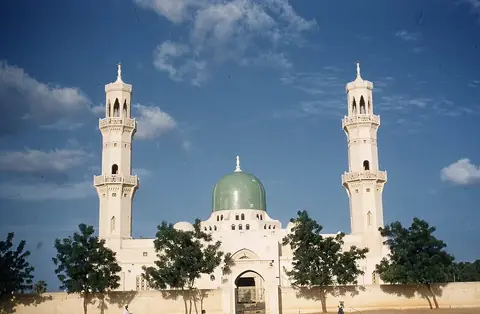 Great Mosque of KanoKano
- Sani Abacha Stadium · Kano
Weather by month
The warmest month is March, with an average high of 35 °C. The wettest is August, with about 333 mm of rain.
| Jan | Feb | Mar | Apr | May | Jun | Jul | Aug | Sep | Oct | Nov | Dec | |
|---|---|---|---|---|---|---|---|---|---|---|---|---|
| Average high, °C | 34 | 35 | 35 | 34 | 31 | 28 | 27 | 27 | 28 | 29 | 32 | 33 |
| Average low, °C | 21 | 22 | 24 | 24 | 23 | 22 | 21 | 21 | 21 | 21 | 21 | 21 |
| Rainfall, mm | 2 | 3 | 22 | 75 | 150 | 203 | 270 | 333 | 249 | 145 | 9 | 2 |
| Rainy days | 0 | 1 | 5 | 10 | 21 | 26 | 27 | 27 | 27 | 21 | 3 | 0 |
Temperatures and rainfall: 1981–2010 averages for Abuja (4 km grid), from CHELSA. Rainy days: 2015–2024, NASA POWER.
Also worth a look
- Agbokim Waterfalls
- Agege Stadium
- Agodi Gardens
- Ahmadu Bello Stadium
- Ajegunle
- Alau Dam
- Arewa House
- Asokoro
- Awhum Waterfall
- Borno Emirate
- Chad Basin National Park
- Cross River National Park
- Dadin Kowa Dam
- Dalla Hill
- Egbin Thermal Power Station
- Erin-Ijesha Waterfalls
- Esiẹ Museum
- Farin Ruwa Falls
- Federal Polytechnic, Nekede
- Fika Emirate
- Gashaka Gumti National Park
- Gidan Makama Museum Kano
- Gobarau Minaret
- Gombe Emirate
- Gurara Waterfalls
- Ibini Ukpabi
- Ikogosi Warm Springs
- Ikom monoliths
- Imo River
- Jabi Lake
- Jaekel House
- Jebba Hydroelectric Power Station
- Kainji Dam
- Kainji National Park
- Kajuru Castle
- Kurmi Market
- Lagos Central Mosque
- Lagos Trade Fair Complex
- Lekki Conservation Centre
- Mambilla Plateau