Cheonan
City in South Korea
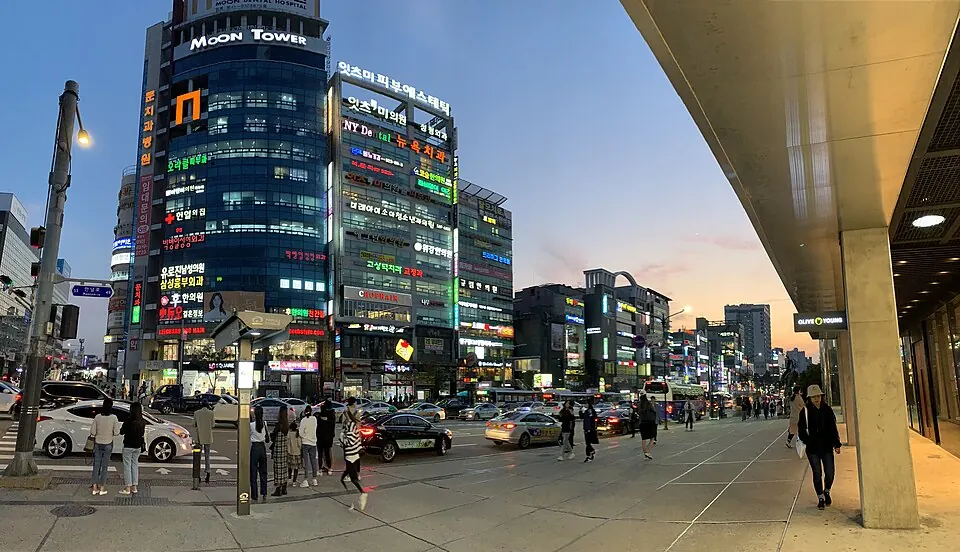
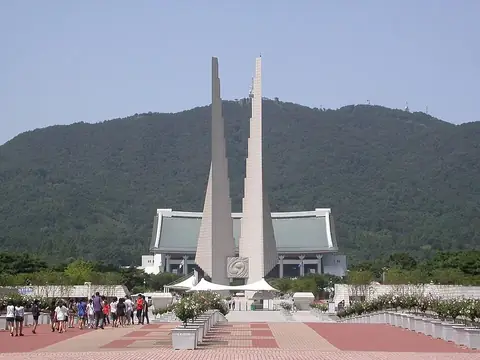
Cheonan is a city in South Korea with a population of 656,583 in 2023. Located 85 km from Seoul, the city draws visitors with cultural landmarks such as the Independence Hall of Korea and the Statue of Peace.
What to see
Visitors to Cheonan can explore the Independence Hall of Korea and view the Statue of Peace.
When to go
January sees daily highs of 2 °C and lows of -7 °C with 23 mm of rain on about 4 days. February averages highs of 5 °C and lows of -4 °C with 26 mm of rain on 4 days. March brings highs of 10 °C and lows of 0 °C with 50 mm of rain on 5 days. April warms to highs of 18 °C and lows of 6 °C with 68 mm of rain on 7 days. May reaches highs of 23 °C and lows of 12 °C with 85 mm of rain on 8 days. June climbs to highs of 27 °C and lows of 17 °C with 131 mm of rain on 10 days. July records highs of 29 °C and lows of 22 °C with 313 mm of rain on 18 days. August records highs of 29 °C and lows of 22 °C with 275 mm of rain on 16 days. September cools to highs of 25 °C and lows of 16 °C with 161 mm of rain on 10 days. October brings highs of 19 °C and lows of 9 °C with 49 mm of rain on 7 days. November drops to highs of 11 °C and lows of 2 °C with 46 mm of rain on 7 days. December records highs of 4 °C and lows of -4 °C with 26 mm of rain on 5 days.
Getting there
The nearest airport is Cheongju International Airport in Cheongju, located 33 km away.
Top sights in Cheonan

Weather by month
The warmest month is August, with an average high of 29 °C. The wettest is July, with about 313 mm of rain.
| Jan | Feb | Mar | Apr | May | Jun | Jul | Aug | Sep | Oct | Nov | Dec | |
|---|---|---|---|---|---|---|---|---|---|---|---|---|
| Average high, °C | 2 | 5 | 10 | 18 | 23 | 27 | 29 | 29 | 25 | 19 | 11 | 4 |
| Average low, °C | -7 | -4 | 0 | 6 | 12 | 17 | 22 | 22 | 16 | 9 | 2 | -4 |
| Rainfall, mm | 23 | 26 | 50 | 68 | 85 | 131 | 313 | 275 | 161 | 49 | 46 | 26 |
| Rainy days | 4 | 4 | 5 | 7 | 8 | 10 | 18 | 16 | 10 | 7 | 7 | 5 |
Temperatures and rainfall: 1981–2010 averages for Cheonan (4 km grid), from CHELSA. Rainy days: 2015–2024, NASA POWER.