Serengeti National Park
Tanzania UNESCO World Heritage Site
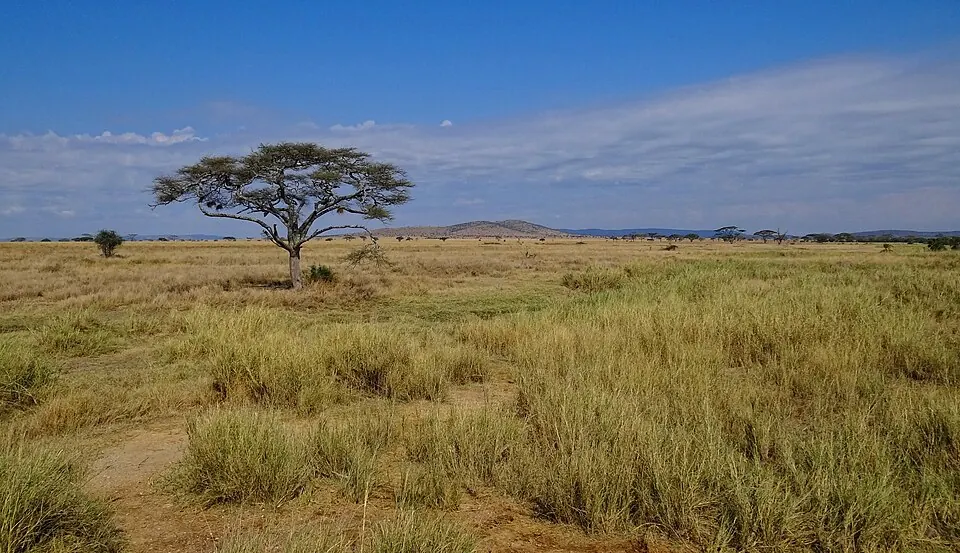
Serengeti National Park is a transboundary protected area and national park in Tanzania. Established in 1940, it is a designated UNESCO World Heritage Site and ranks as the fourth most looked-up sight in the country on English Wikipedia. In 2023, the park recorded approximately 430,000 visitors.
Planning a visit
The driest months for visiting the Serengeti are June, July, and August, which see very little rainfall and daily highs around 28 °C to 29 °C. Rainfall increases significantly from March through May and again from November through December, with April seeing the most wet days. September and October remain warm and relatively dry, offering another window for travel.
To reach the park, you can fly into Seronera Airport, which is located 26 kilometers away. Mwanza International Airport serves as a regional hub 185 kilometers from the park. The Serengeti is situated 439 kilometers from Dodoma, the capital of Tanzania. It spans 14,763 square kilometers across the Mara and Simiyu regions and is operated by Tanzania National Parks.
Weather by month
Temperatures stay much the same all year, around 23 °C on average. The wettest is April, with about 140 mm of rain.
| Jan | Feb | Mar | Apr | May | Jun | Jul | Aug | Sep | Oct | Nov | Dec | |
|---|---|---|---|---|---|---|---|---|---|---|---|---|
| Average high, °C | 28 | 29 | 29 | 28 | 27 | 28 | 28 | 29 | 30 | 30 | 29 | 28 |
| Average low, °C | 17 | 17 | 17 | 17 | 17 | 16 | 16 | 16 | 17 | 17 | 17 | 17 |
| Rainfall, mm | 76 | 70 | 122 | 140 | 84 | 13 | 6 | 11 | 18 | 34 | 87 | 84 |
| Rainy days | 19 | 14 | 18 | 20 | 10 | 2 | 1 | 5 | 8 | 13 | 21 | 21 |
Temperatures and rainfall: 1981–2010 averages for this spot (4 km grid), from CHELSA. Rainy days: 2015–2024, NASA POWER.