Nassau
Capital of The Bahamas
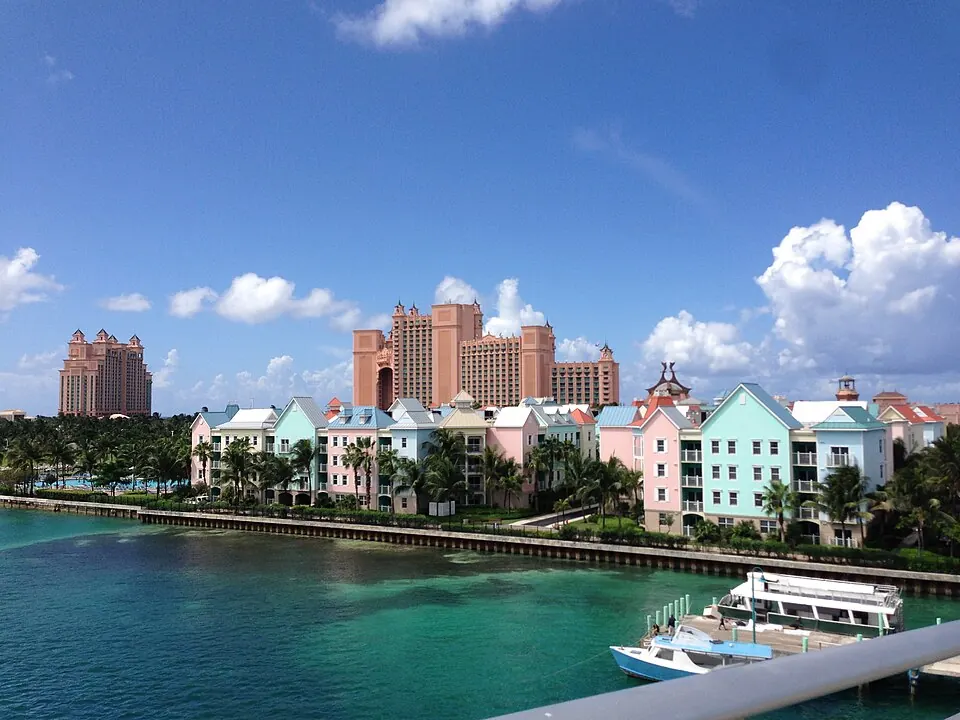
Nassau is the capital city of The Bahamas and has a population of about 228,000 as of 2025. Visitors travel to the city to explore historical sites such as the Queen's Staircase and Fort Fincastle.
What to see
The city features historical landmarks that highlight its past. Visitors can tour Fort Fincastle, a structure built for defense, and the nearby Queen's Staircase, which consists of a set of carved steps.
When to go
Nassau maintains warm average temperatures throughout the year, ranging from 22 °C in January and February to 28 °C in July and August. Travelers seeking drier weather may prefer the period from January through April, when monthly rainfall totals are generally between 40 mm and 44 mm, with rainy days occurring on 6 to 11 days per month. The wetter season begins in May, with rainfall increasing significantly to 112 mm and continuing through the summer months, often peaking in June with 220 mm of rain over 24 days.
Getting there
The primary gateway for travelers is Lynden Pindling International Airport (NAS), which is located 14 km from Nassau.
Top sights in Nassau


Weather by month
The warmest month is August, averaging 28 °C. The wettest is June, with about 220 mm of rain.
| Jan | Feb | Mar | Apr | May | Jun | Jul | Aug | Sep | Oct | Nov | Dec | |
|---|---|---|---|---|---|---|---|---|---|---|---|---|
| Average temperature, °C | 22 | 22 | 23 | 24 | 25 | 27 | 28 | 28 | 27 | 26 | 25 | 23 |
| Rainfall, mm | 40 | 44 | 42 | 44 | 112 | 220 | 145 | 174 | 176 | 137 | 73 | 51 |
| Rainy days | 11 | 6 | 7 | 10 | 18 | 24 | 22 | 24 | 21 | 19 | 12 | 11 |
Temperatures and rainfall: 1981–2010 averages for Nassau (4 km grid), from CHELSA. Rainy days: 2015–2024, NASA POWER.