American Museum of Natural History
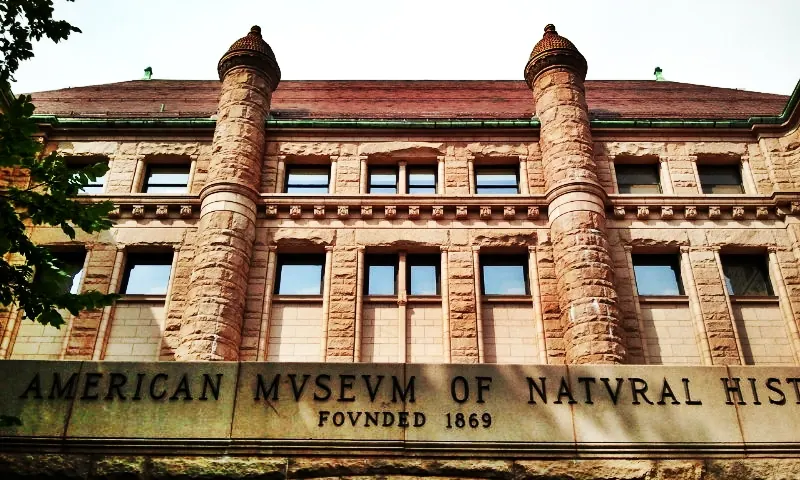
The American Museum of Natural History is a natural history museum, educational institution, and nonprofit organization in Manhattan that was established in 1869 and opened in 1878. Its architecture includes work by Calvert Vaux, Rafael Guastavino, Jacob Wrey Mould, and James Polshek, and it is both a New York City Landmark and a National Register of Historic Places listed place. This site is one of the 120 sights in the United States on this website, is the 86th most looked-up sight in the country on English Wikipedia, and has information at http://www.amnh.org/.
Planning a visit
The museum is open Monday through Sunday from 10:00 to 17:30. A fee is required for entry, and the facility is wheelchair accessible. It is located on Central Park West between 77th and 81st Streets. Travelers can reach the area via LaGuardia Airport, which is 9 km away, or from Washington, D.C., which is 335 km away.
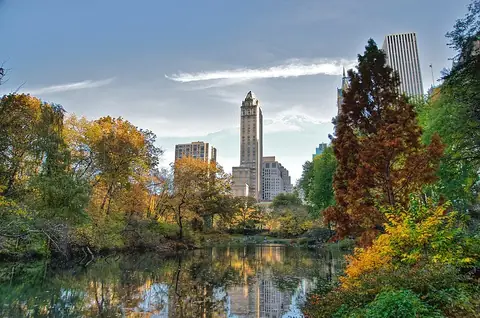
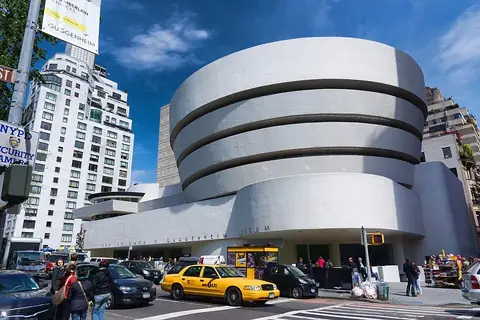
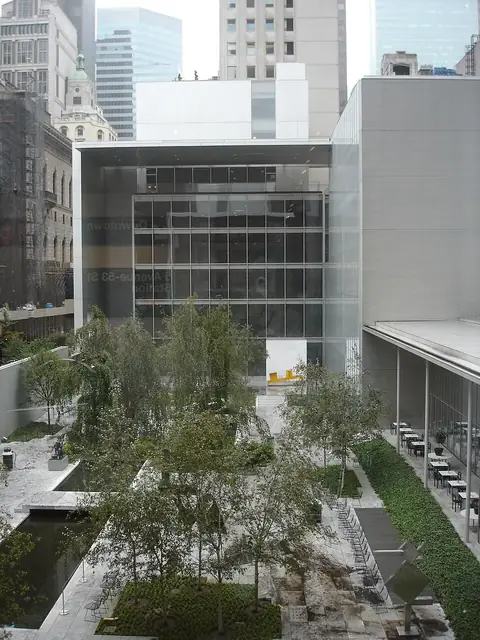
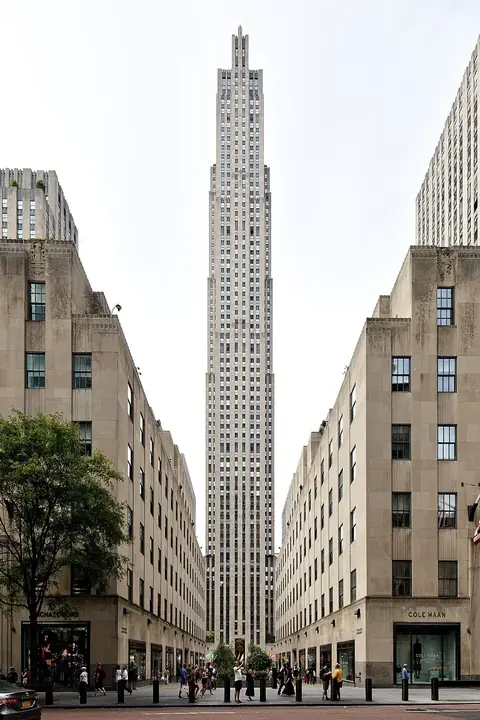
Temperatures fluctuate throughout the year, with July being the warmest month at 28 °C and January the coldest at -4 °C. Rainfall occurs in all months, with July having about 15 rainy days and 117 mm of rain. The museum can be combined with visits to Central Park (0.7 km) and the Metropolitan Museum of Art (0.9 km), as well as the Solomon R. Guggenheim Museum (1.3 km), the Museum of Modern Art (2.1 km), and 30 Rockefeller Plaza (2.5 km).
Weather by month
The warmest month is July, with an average high of 28 °C. Rain is spread fairly evenly through the year.
| Jan | Feb | Mar | Apr | May | Jun | Jul | Aug | Sep | Oct | Nov | Dec | |
|---|---|---|---|---|---|---|---|---|---|---|---|---|
| Average high, °C | 3 | 5 | 9 | 15 | 21 | 26 | 28 | 27 | 23 | 17 | 11 | 6 |
| Average low, °C | -4 | -3 | 1 | 7 | 12 | 18 | 21 | 20 | 17 | 11 | 5 | 0 |
| Rainfall, mm | 84 | 78 | 105 | 108 | 106 | 102 | 117 | 112 | 103 | 106 | 98 | 101 |
| Rainy days | 9 | 10 | 10 | 12 | 12 | 13 | 15 | 14 | 10 | 9 | 8 | 11 |
Temperatures and rainfall: 1981–2010 averages for this spot (4 km grid), from CHELSA. Rainy days: 2015–2024, NASA POWER.