Croatia
Country · Europe, Southern Europe
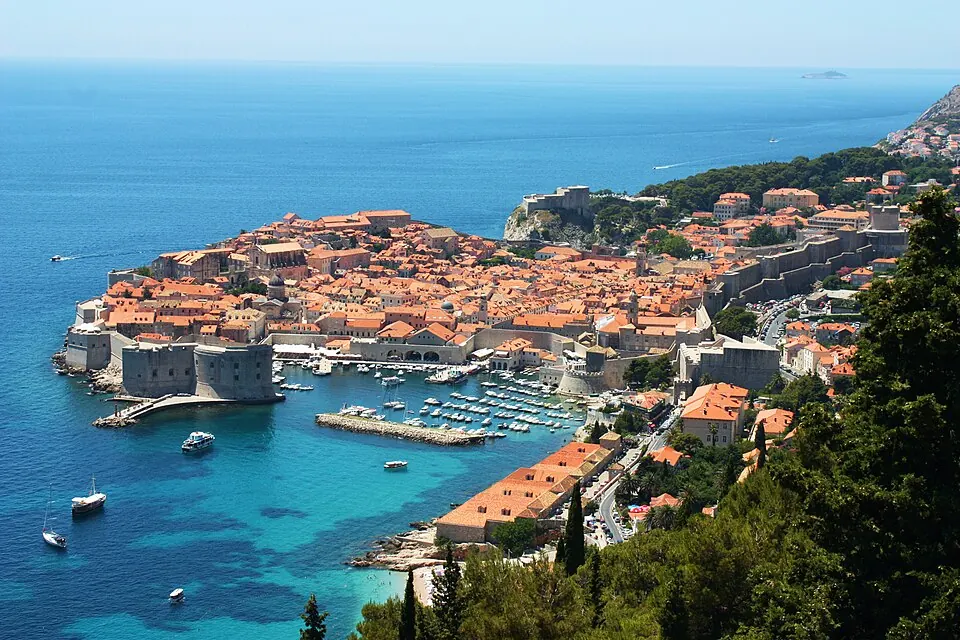
Located in Southern Europe, Croatia borders Slovenia, Hungary, Serbia, Bosnia and Herzegovina, and Montenegro. With a land area of 56,594 square kilometers and a population of about 3.9 million, the country features a mix of historic urban centers and natural landmarks.
Highlights
This guide covers 21 sights across the country. Historic architecture includes the Pula Arena, the Arch of the Sergii, and the Euphrasian Basilica. In Split, travelers visit Diocletian's Palace, the Cathedral of Saint Domnius, and the Temple of Jupiter. Dubrovnik features the Rector's Palace, the Dubrovnik Cathedral, and Lovrijenac. Other notable cultural sites are the Zagreb Cathedral, Mirogoj Cemetery, and the Grič Tunnel in the capital, along with the Šibenik Cathedral and Zadar Cathedral. For natural scenery, the country offers Plitvice Lakes National Park, Krka National Park, and Brijuni. Modern engineering and design landmarks include the Pelješac Bridge, the Sea organ, and the Monument to the Sun.
Food and drink
Local cuisine includes dishes such as Kulen, Pašticada, Soparnik, and Jota. Other traditional foods are Zagorski štrukli, Mlinci, Fusi, and Fritaja. Sweet items include Licitar, Pinca, and Rab cake, while Pag cheese is also a local specialty.
When to go
The climate at the capital, Zagreb, varies throughout the year. Winter months from December to February are cold, with highs between 4 °C and 7 °C and lows dropping to -3 °C. Spring brings warming temperatures, reaching 21 °C by May, though rainfall increases. Summer, from June to August, is the warmest period, with highs of 24 °C to 27 °C. September remains mild at 22 °C, while October and November cool down to highs of 16 °C and 10 °C respectively.
Practical notes
The official currency is the euro (EUR) and the primary language is Croatian. The country operates on UTC+01:00 time. Electrical outlets use plugs C and F with a voltage of 230 V. Traffic moves on the right side of the road.
Cities
Food and drink to try in Croatia
- Licitar
- Kulen
- Pinca
- Pag cheese
- Zagorski štrukli
- Mlinci
- Pašticada
- Soparnik
- Jota
- Fusi
- Fritaja
- Rab cake
Top sights in Croatia
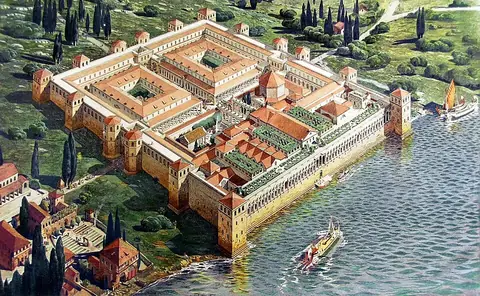 UNESCODiocletian's PalaceSplit
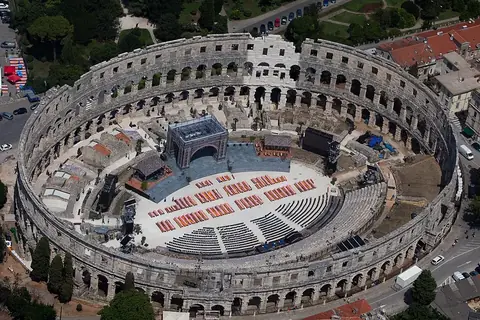 Pula ArenaPula
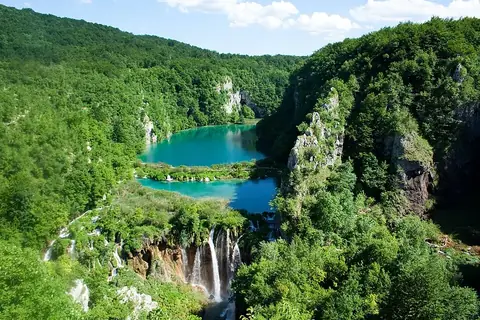 UNESCOPlitvice Lakes National Park
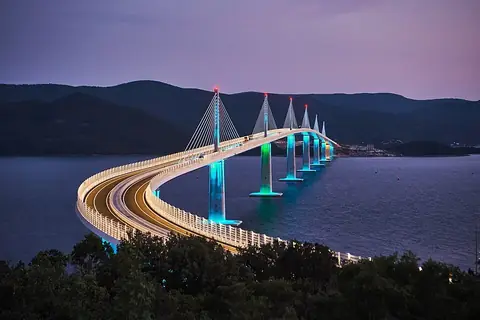 Pelješac BridgeNeum
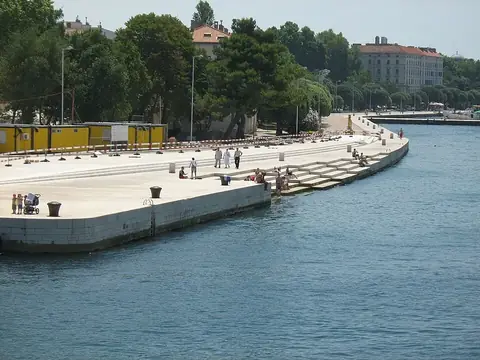 Sea organZadar
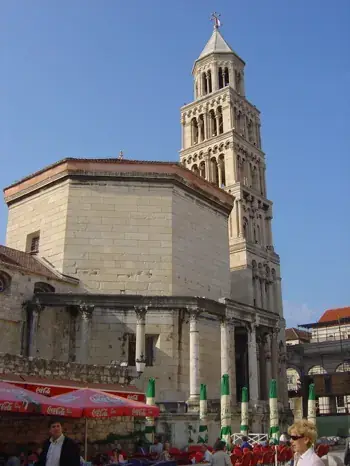 Cathedral of Saint DomniusSplit
 BrijuniPula
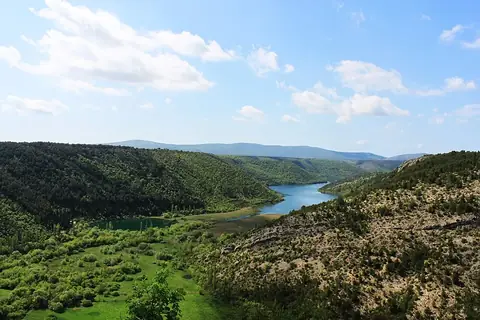 Krka National Park
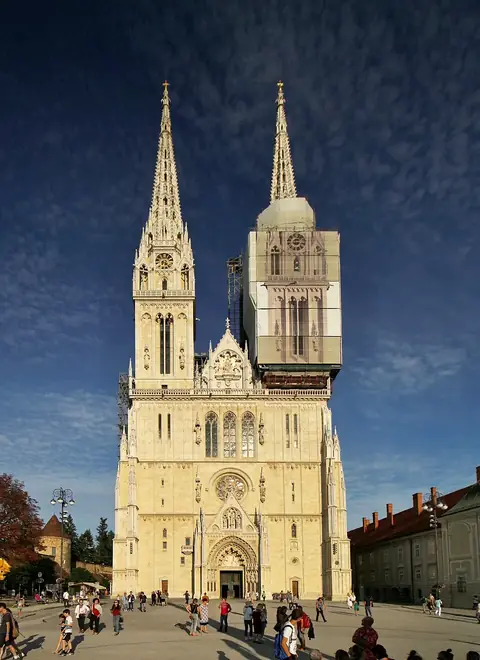 Zagreb CathedralZagreb
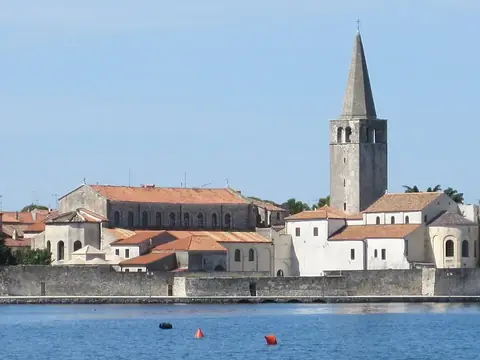 UNESCOEuphrasian Basilica
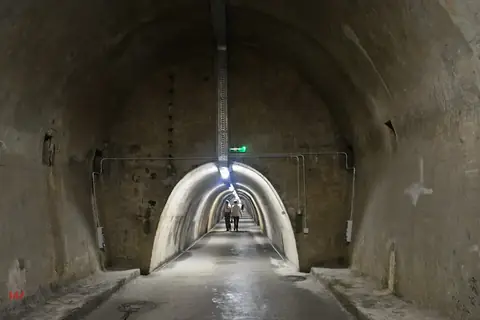 Grič TunnelZagreb
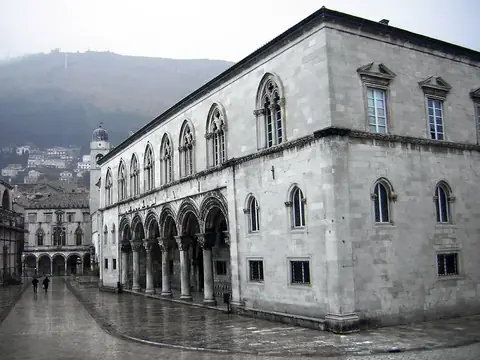 Rector's Palace, DubrovnikDubrovnik
- Lovrijenac · Dubrovnik
- Šibenik Cathedral · ŠibenikUNESCO
- Monument to the Sun · Zadar
- Mirogoj Cemetery · Zagreb
- Dubrovnik Cathedral · Dubrovnik
- Zadar Cathedral · Zadar
- Temple of Jupiter, Split · Split
- Arch of the Sergii · Pula
- Ivan Meštrović Gallery · Split
Weather by month
The warmest month is July, with an average high of 27 °C. Rain is spread fairly evenly through the year.
| Jan | Feb | Mar | Apr | May | Jun | Jul | Aug | Sep | Oct | Nov | Dec | |
|---|---|---|---|---|---|---|---|---|---|---|---|---|
| Average high, °C | 4 | 7 | 12 | 16 | 21 | 25 | 27 | 27 | 22 | 16 | 10 | 5 |
| Average low, °C | -3 | -2 | 2 | 6 | 11 | 14 | 17 | 17 | 12 | 8 | 3 | -1 |
| Rainfall, mm | 48 | 51 | 63 | 65 | 85 | 104 | 85 | 98 | 107 | 88 | 83 | 71 |
| Rainy days | 8 | 8 | 8 | 9 | 15 | 14 | 11 | 9 | 10 | 9 | 9 | 8 |
Temperatures and rainfall: 1981–2010 averages for Zagreb (4 km grid), from CHELSA. Rainy days: 2015–2024, NASA POWER.
Also worth a look
- Blaca hermitage
- Burnum
- Church of St. Donatus
- Church of the Holy Cross, Nin
- Collegium Ragusinum
- Croatian Museum of Naïve Art
- Dubrovnik Bell Tower
- Dubrovnik Synagogue
- Eltz Manor
- Franciscan friary, Dubrovnik
- Knin Fortress
- Korčula Cathedral
- Lotrščak Tower
- Mediterranean Sea
- Mirabella Fortress
- Mljet National Park
- Museum of Contemporary Art, Zagreb
- Museum of Illusions
- Nama
- Nikola Tesla Technical Museum
- Pag
- Paklenica
- Peruća Lake
- Porta Gemina
- Presidential Palace, Zagreb
- Republic of Croatia Square
- Sabor Palace
- Sponza Palace
- St Blaise's Church
- St. Nicholas Fortress
- Stari Grad Plain
- Starigrad Fortress
- Telašćica
- Trakošćan Castle
- Trogir Cathedral
- Trsat Castle
- Veliki Tabor Castle
- Žumberak Mountains