Uluru

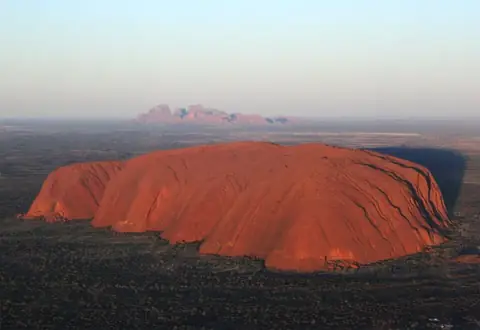
Uluru is an inselberg composed of arkose, rising to an elevation of 863 meters in the Northern Territory of Australia. It is the most looked-up sight in the country on English Wikipedia and represents a significant geological feature.
Planning a visit
Temperatures are highest from November to February, often reaching 34 °C to 37 °C. Cooler weather occurs during the winter months of June to August, with daily highs of 19 °C to 22 °C and lows of 6 °C to 8 °C. Rainfall is generally low throughout the year, with the highest frequency of rainy days occurring in January, when there are about 4 days of rain.
The site is located 2,054 km from Canberra. The nearest airport is Ayers Rock Connellan Airport in Yulara, situated 19 km away. Visitors can combine a trip to Uluru with visits to nearby locations, including the Uluṟu-Kata Tjuṯa National Park at 5.7 km and Kata Tjuta at 28.3 km.
Weather by month
The warmest month is January, with an average high of 37 °C. The wettest is March, with about 50 mm of rain.
| Jan | Feb | Mar | Apr | May | Jun | Jul | Aug | Sep | Oct | Nov | Dec | |
|---|---|---|---|---|---|---|---|---|---|---|---|---|
| Average high, °C | 37 | 36 | 33 | 29 | 23 | 19 | 19 | 22 | 27 | 31 | 34 | 35 |
| Average low, °C | 24 | 23 | 20 | 16 | 11 | 7 | 6 | 8 | 13 | 16 | 20 | 22 |
| Rainfall, mm | 43 | 42 | 50 | 12 | 18 | 18 | 14 | 8 | 12 | 18 | 32 | 41 |
| Rainy days | 4 | 2 | 2 | 1 | 2 | 2 | 0 | 1 | 2 | 2 | 3 | 2 |
Temperatures and rainfall: 1981–2010 averages for this spot (4 km grid), from CHELSA. Rainy days: 2015–2024, NASA POWER.