Australia
Country · Oceania, Australia and New Zealand
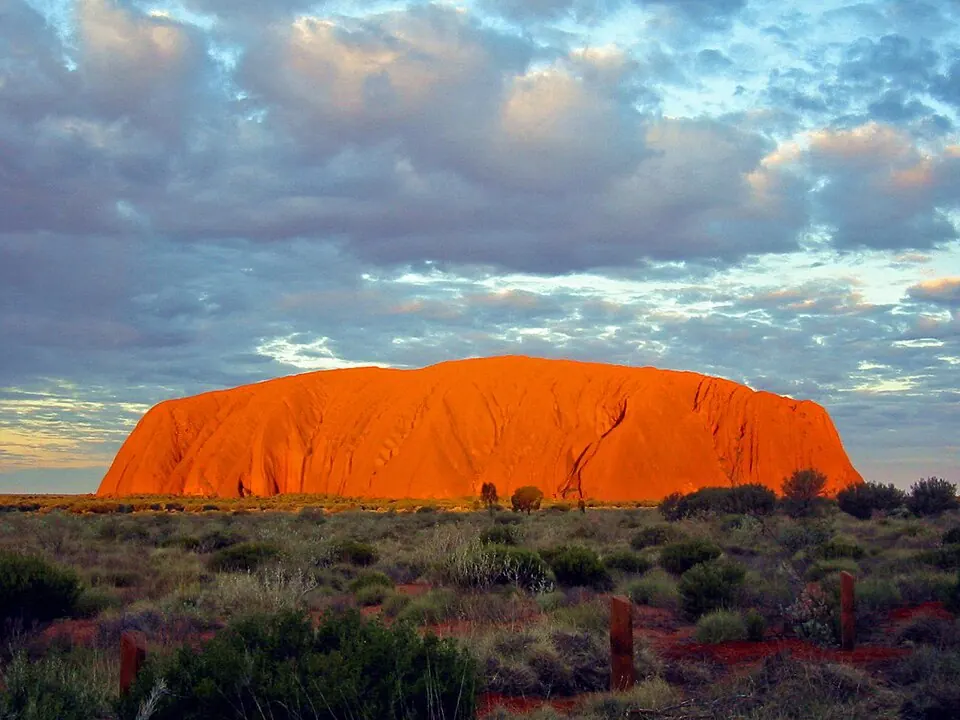
Located in Oceania, Australia spans over 7.6 million square kilometers and is home to approximately 27.6 million people. The capital is Canberra, and the country offers diverse experiences ranging from expansive natural wonders and wildlife to major urban centers.
Highlights
This guide covers 62 sights across the country. Natural landmarks are a central feature, including the Great Barrier Reef and the Daintree Rainforest, as well as the Outback and the Great Dividing Range. Notable mountains include Mount Kosciuszko and the Australian Alps. Cultural and architectural landmarks include the Sydney Opera House, Parliament House in Canberra, and the Q1 Tower. Other points of interest include the Twelve Apostles, Botany Bay, the Marree Man, and Burning Mountain. Cities such as Sydney, Melbourne, Perth, Hobart, and Canberra serve as major hubs, while Australia Zoo offers wildlife encounters. Historical sites like the Batavia wreck site and Fremantle also draw interest.
Food and drink
Australian cuisine includes items such as the meat pie, the pie floater, and the halal snack pack. Sweet options include the lamington, frog cake, Anzac biscuit, chocolate crackles, and white Christmas. Other local foods include damper, bush bread, the cruffin, and the hamdog.
When to go
The weather in Canberra is warmest from December to February, with daily highs reaching 24 °C to 27 °C, making these months suitable for outdoor activities. Temperatures drop significantly during the winter months of June and July, with highs of 10 °C to 11 °C and lows near 2 °C. Rainfall is spread throughout the year, with slightly higher precipitation in the spring and summer months of October, November, and December.
Practical notes
The currency is the Australian dollar. English is the primary language. The country operates on 230 volts with type I plugs. Traffic drives on the left side of the road. Australia spans multiple time zones, including UTC+08:00, UTC+08:45, UTC+09:30, UTC+10:00, and UTC+10:30.
Cities
Food and drink to try in Australia
- Lamington
- Frog cake
- Anzac biscuit
- Damper
- Meat pie
- Halal snack pack
- Pie floater
- Cruffin
- White Christmas
- Hamdog
- Bush bread
- Chocolate crackles
Top sights in Australia
 Uluru
Uluru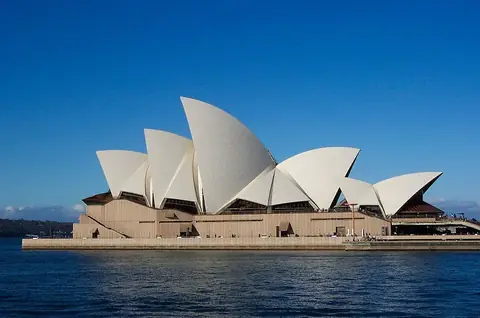 UNESCOSydney Opera HouseSydney
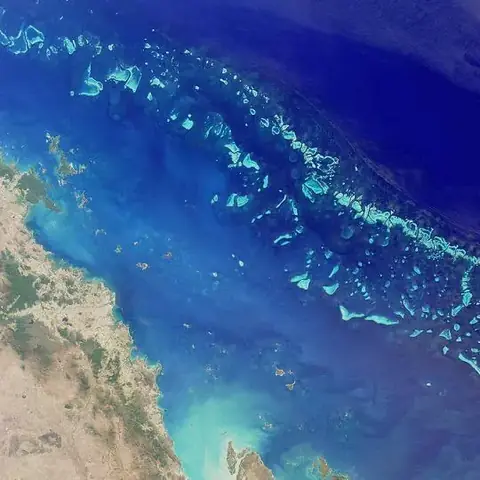 UNESCOGreat Barrier Reef
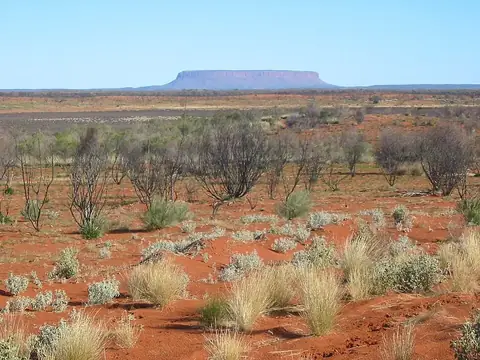 Outback
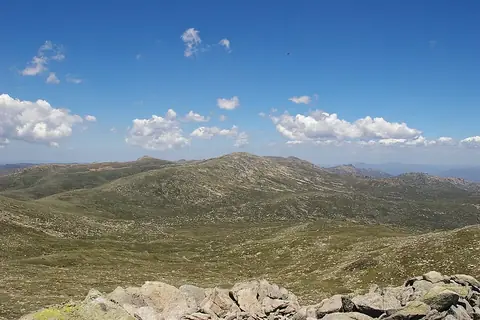 Mount Kosciuszko
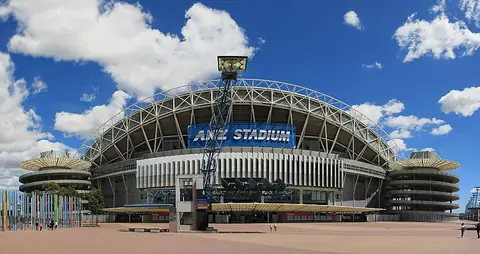 Stadium AustraliaSydney
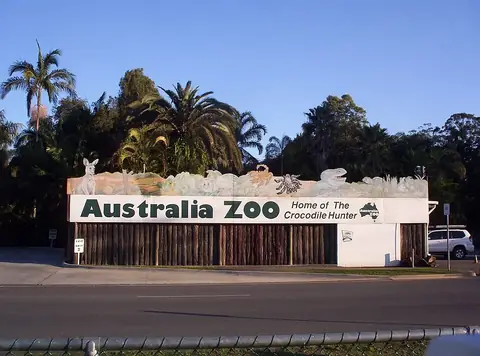 Australia Zoo
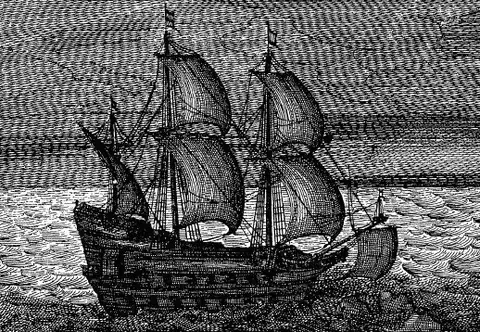 Batavia
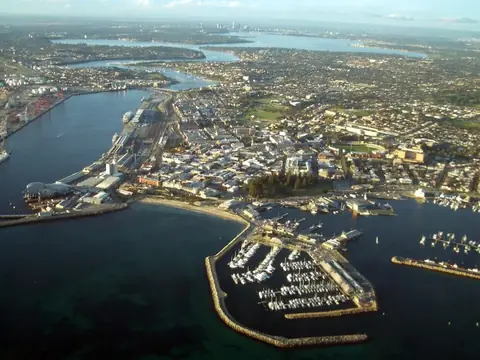 FremantlePerth
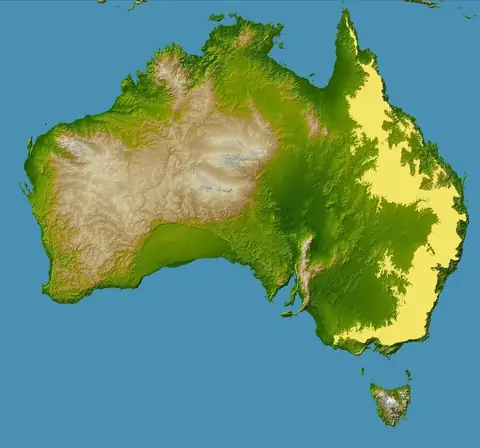 Great Dividing Range
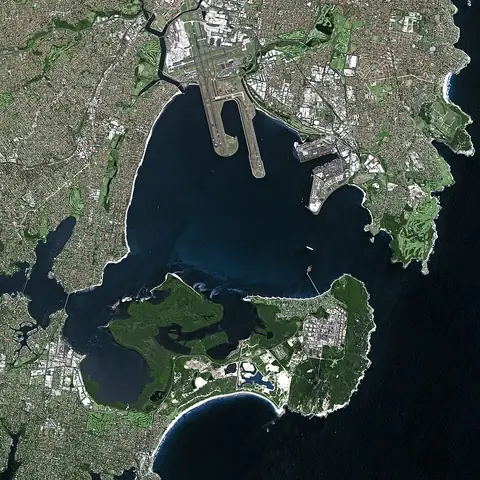 Botany BaySydney
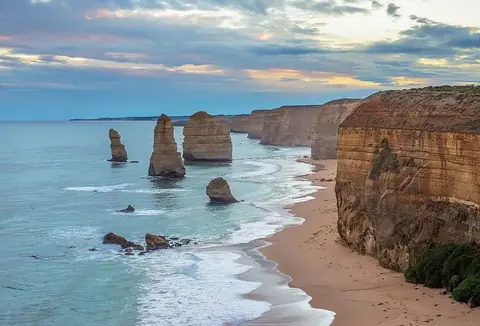 The Twelve Apostles
- Q1 Tower · Gold Coast
- Marree Man · Marree
- Bass Strait
- Australian Alps
- Daintree Rainforest
- Parliament House, Canberra · Canberra
- Burning Mountain · Murrurundi
- Sydney SuperDome · Sydney
- Flinders Street railway station · Melbourne
- High Court of Australia · Canberra
- Taronga Zoo · Sydney
- Sydney Tower · Sydney
- Kakadu National ParkUNESCO
- Principality of Hutt River · Kalbarri
- Finke River
- Central railway station, Sydney · Sydney
- Circular Quay · Sydney
- Australian War Memorial · Canberra
- St Mary's Cathedral, Sydney · Sydney
- Melbourne Park · Melbourne
- Kata Tjuta
- Royal Exhibition Building · Melbourne
- Stuart Highway
- Art Gallery of New South Wales · Sydney
- Queen Victoria Building · Sydney
- Fremantle Prison · PerthUNESCO
- Mount Wellington · Hobart
- Eureka Tower · Melbourne
- National Gallery of Victoria · Melbourne
- Wolfe Creek Crater
- Parkes Observatory
- Shrine of Remembrance · Melbourne
- Canberra Deep Space Communication Complex · Canberra
- Watarrka National Park
- Government House, Canberra · Canberra
- Mount Augustus
- Glass House Mountains
- RAAF Woomera Range Complex
- Melbourne Zoo · Melbourne
- St Patrick's Cathedral, Melbourne · Melbourne
- Uluṟu-Kata Tjuṯa National ParkUNESCO
- Darling Harbour · Sydney
- Cockatoo Island · SydneyUNESCO
- Ningaloo CoastUNESCO
- Gondwana RainforestsUNESCO
- Wet Tropics of QueenslandUNESCO
- Hyde Park Barracks, Sydney · SydneyUNESCO
- Budj BimUNESCO
- Lamington National ParkUNESCO
- Cascades Female Factory · HobartUNESCO
Weather by month
The warmest month is January, with an average high of 27 °C. Rain is spread fairly evenly through the year.
| Jan | Feb | Mar | Apr | May | Jun | Jul | Aug | Sep | Oct | Nov | Dec | |
|---|---|---|---|---|---|---|---|---|---|---|---|---|
| Average high, °C | 27 | 26 | 23 | 19 | 15 | 11 | 10 | 12 | 15 | 18 | 22 | 24 |
| Average low, °C | 14 | 14 | 12 | 8 | 5 | 3 | 2 | 2 | 5 | 7 | 10 | 12 |
| Rainfall, mm | 55 | 56 | 48 | 42 | 46 | 58 | 62 | 61 | 61 | 63 | 70 | 64 |
| Rainy days | 13 | 10 | 12 | 7 | 7 | 7 | 6 | 7 | 6 | 10 | 11 | 11 |
Temperatures and rainfall: 1981–2010 averages for Canberra (4 km grid), from CHELSA. Rainy days: 2015–2024, NASA POWER.
Also worth a look
- Alpine National Park
- Anzac Memorial
- Art Gallery of South Australia
- Auburn Gallipoli Mosque
- Australian Museum
- Australian National Botanic Gardens
- Australian National Maritime Museum
- Bald Rock National Park
- Bare Island
- Barrington Tops National Park
- Belair National Park
- Boodjamulla National Park
- Border Ranges National Park
- Brisbane City Botanic Gardens
- Bunya Mountains National Park
- Cape Byron
- Cape Range National Park
- Carlton Gardens
- Carnarvon National Park
- Chambers Pillar
- Chinese Garden of Friendship
- Coorong National Park
- Cradle Mountain-Lake St Clair National Park
- Dorrigo National Park
- Eungella National Park
- Federation Square
- Fitzgerald River National Park
- Fitzroy Island
- Freycinet National Park
- Gordon Dam
- Grampians National Park
- Great Keppel Island
- Great North Road
- Great Otway National Park
- Great Sandy National Park
- Greater Blue Mountains Area
- Hopetoun Falls
- Hyde Park, Sydney
- Ikara–Flinders Ranges National Park
- Jenolan Caves