Tunisia
Country · Africa, Northern Africa
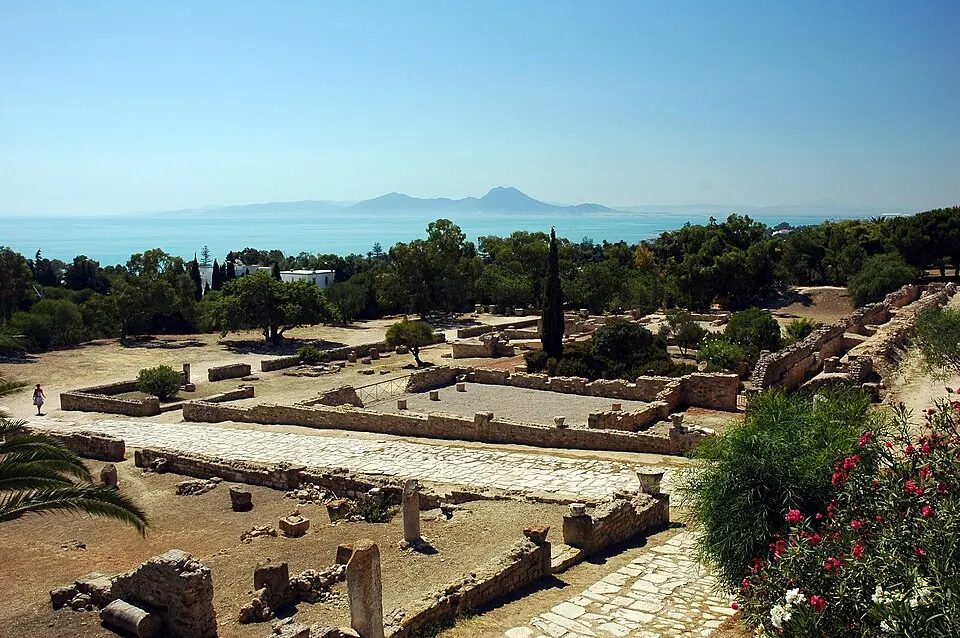
Tunisia is a country in Northern Africa, bordered by Algeria and Libya. With a population of about 12.3 million, it features a capital city, Tunis, and covers an area of 163,610 square kilometers. Travelers can visit nine significant locations, including various archaeological sites and historic mosques.
Highlights
This guide covers nine major sights across the country. Many of these focus on history and architecture, such as the Archaeological site of Carthage, the Amphitheatre of El Jem (UNESCO), and Dougga (UNESCO). Visitors can also see the Medina of Tunis (UNESCO), the Great Mosque of Kairouan, and the Bardo National Museum. Other notable locations include the site of Kerkouane (UNESCO) and the historical structure of Ksar Ouled Soltane. These sites provide insight into the region's architectural and archaeological heritage.
Food and drink
Local culinary traditions include dishes such as Shakshouka, Mechouia salad, Lablabi, Fricasse, and Msoki. Other options include Kabkabou, Ummak huriyya, and Taguella. For bread, there is Tabouna bread. Sweet items include Bambalouni and Assidat zgougou. Boukha is also available.
When to go
The climate data is for Tunis. Summers are hot and dry, with daily highs reaching 31 °C in July and 32 °C in August. Rain is minimal during these months. Winters are cooler, with daily highs around 15 °C to 16 °C in January and December. These winter months are also the wettest, with about 73 mm to 79 mm of rain over 10 days each. Spring, particularly May, offers milder temperatures with highs around 24 °C and less rain.
Practical notes
The currency is the Tunisian dinar. The official language is Arabic. The country uses 230V electricity with plug types C and E. Traffic moves on the right side of the road. The time zone is UTC+01:00.
Cities
Food and drink to try in Tunisia
- Shakshouka
- Boukha
- Mechouia salad
- Lablabi
- Fricasse
- Bambalouni
- Assidat zgougou
- Taguella
- Msoki
- Kabkabou
- Ummak huriyya
- Tabouna bread
Top sights in Tunisia
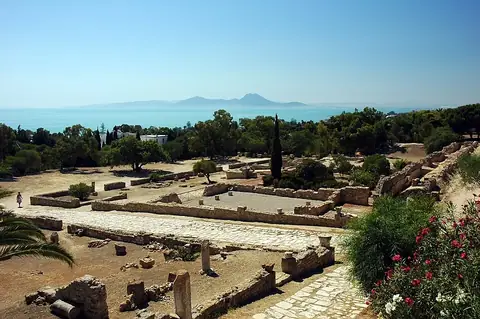 Carthage
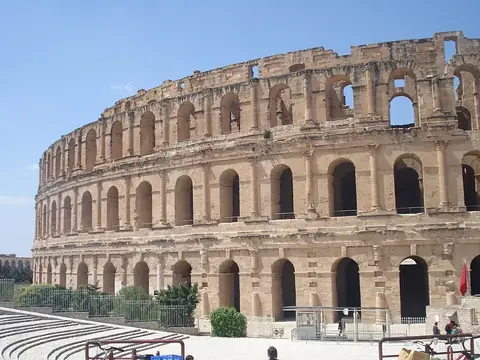 UNESCOAmphitheatre of El JemEl Jem
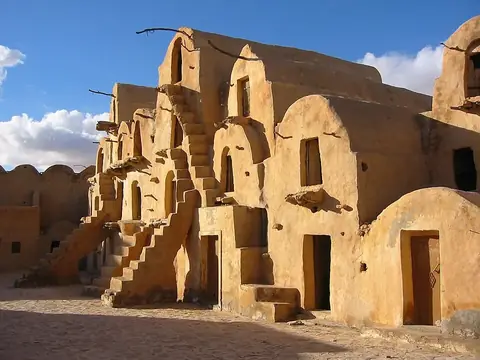 Ksar Ouled SoltaneTataouine
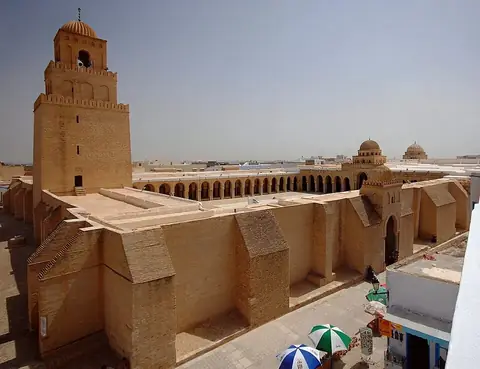 Great Mosque of KairouanKairouan
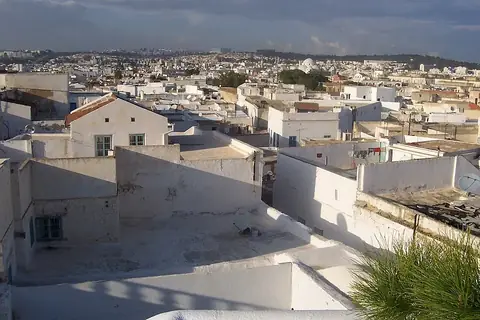 UNESCOMedina of TunisTunis
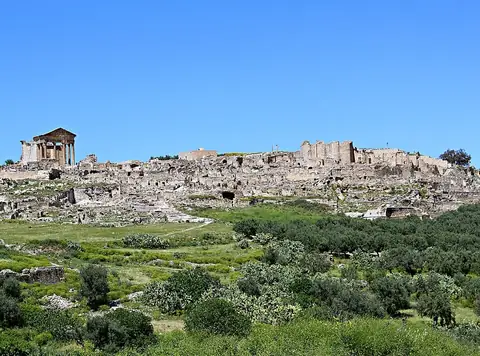 UNESCODougga
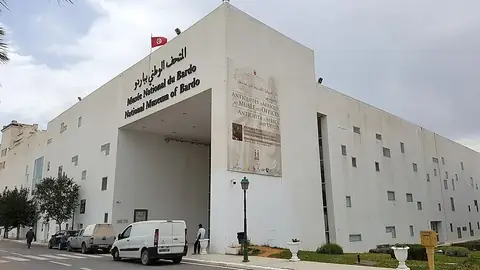 Bardo National MuseumTunis
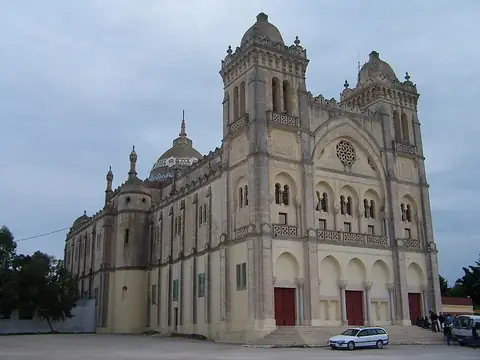 Acropolium of CarthageCarthage
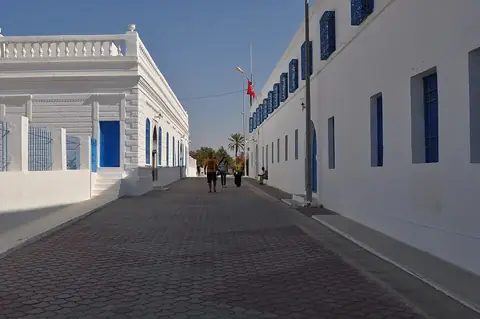 El Ghriba SynagogueDjerba
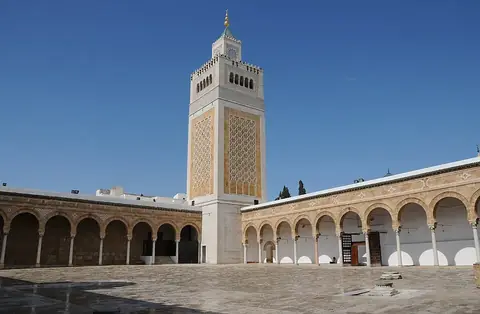 Al-Zaytuna MosqueTunis
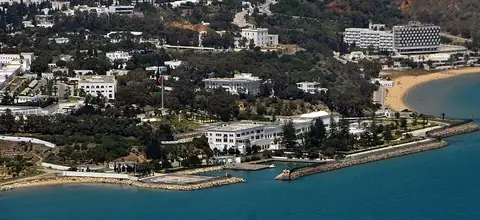 Carthage PalaceCarthage
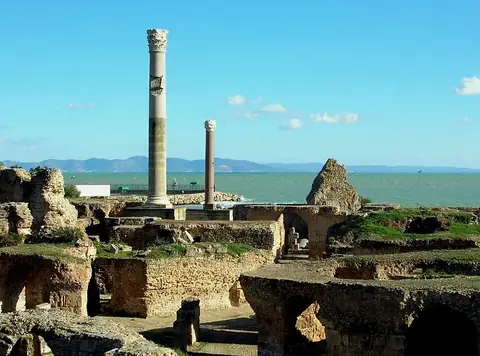 Baths of AntoninusCarthage
- Raqqada · Kairouan
- KerkouaneUNESCO
- Archaeological site of CarthageUNESCO
- Ribat of Monastir · Monastir
- Bourguiba mausoleum · Monastir
- Borj El Kebir · Djerba
Weather by month
The warmest month is August, with an average high of 32 °C. The wettest is December, with about 79 mm of rain.
| Jan | Feb | Mar | Apr | May | Jun | Jul | Aug | Sep | Oct | Nov | Dec | |
|---|---|---|---|---|---|---|---|---|---|---|---|---|
| Average high, °C | 15 | 15 | 17 | 20 | 24 | 28 | 31 | 32 | 28 | 25 | 20 | 16 |
| Average low, °C | 9 | 9 | 10 | 12 | 15 | 19 | 21 | 22 | 21 | 18 | 13 | 10 |
| Rainfall, mm | 73 | 53 | 44 | 41 | 25 | 12 | 3 | 8 | 52 | 52 | 59 | 79 |
| Rainy days | 10 | 7 | 8 | 7 | 7 | 3 | 1 | 5 | 8 | 8 | 10 | 10 |
Temperatures and rainfall: 1981–2010 averages for Tunis (4 km grid), from CHELSA. Rainy days: 2015–2024, NASA POWER.
Also worth a look
- Bab el Bhar
- Carthage National Museum
- Carthage amphitheatre
- Cathedral of Saint Vincent de Paul
- Ennejma Ezzahra
- Great Mosque of Mahdiya
- Great Mosque of Sousse
- Lake Ichkeul
- Medina of Sousse
- Pupput
- Ribat of Sousse
- Sousse Archaeological Museum
- Tourbet el Bey
- Uthina
- Zawiya of Sidi Sahib